
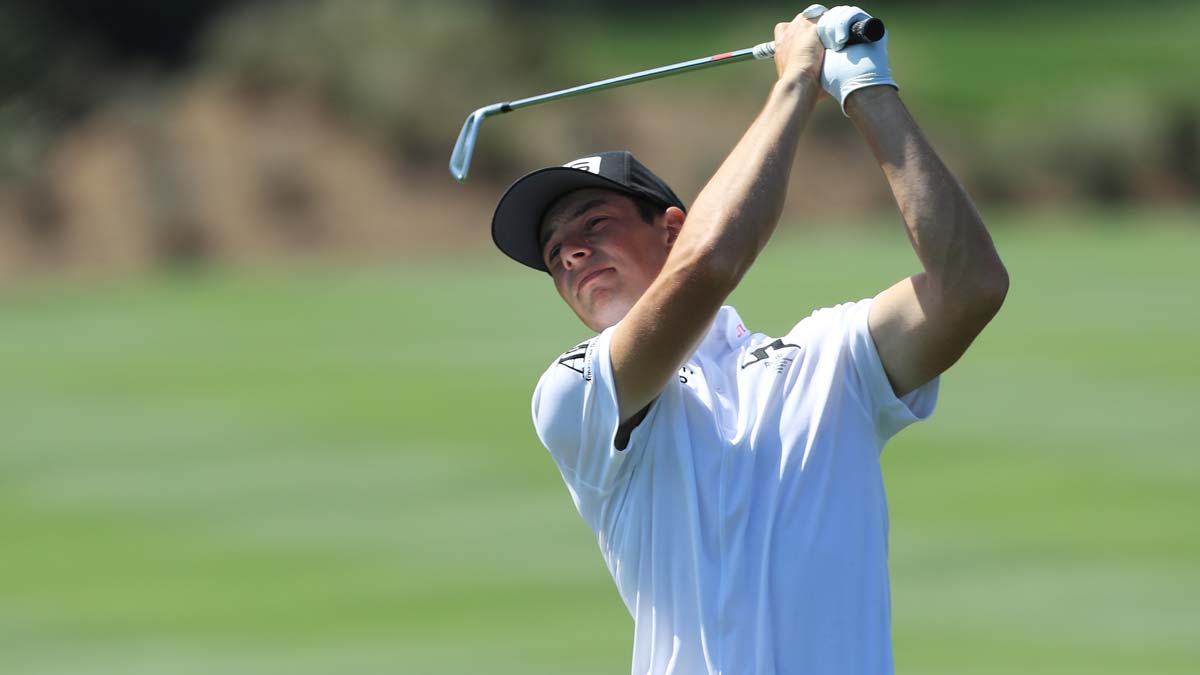
Viktor Hovland’s golf swing is the perfect hybrid, designed for both accuracy and distance. With the rise of technology and science as it relates to the golf swing, gone is the cookie-cutter approach. Today, PGA Tour players are world-class athletes who understand which movements help them play better. Itâs something from which weekend golfers can learn a lot.
Viktor Hovland is a perfect example. His swing is powerful but doesnât sacrifice consistency: Last season, he hit 75 percent of his fairways and clocked 13 consecutive rounds in the 60s. He achieves this by creating matchups between his clubface and his body, like his powerful rotational move and flexed lead wrist. If thereâs one thing, above all else, that recreational players can learn from Hovlandâs swing, it is the way he âloads the slings.â His slightly rounded setup position allows him to engage his core. As he turns back, heâs fully coiled yet maintains control over the clubface, and when he comes down, he releases all that power with devastating rotational speed.


Try this ‘pump’ drill to groove Viktor Hovland’s powerful golf swing
Viktorâs swing is the embodiment of a modern, science-driven approach, but what impresses me most about Viktor is his attitude. He may be young, but heâs not afraid of playing in the biggest events. Heâs excited to tee it up every week and compete against the worldâs top players. In the biggest events, he rises to the challenge, and it wonât take long for other players to regard him as a player they need to beat.
Follow these six steps to swing like the young star.


1. Address
A classic look with a neutral pelvis and an engaged core. Notice how Viktorâs shoulders are slightly rounded, or protracted, similar to many golfing greats such as Jack Nicklaus and Sam Snead.
2. Start
Viktorâs arms are soft but his clubface is square to his address posture. His torso is winding up as it begins its powerful turn.
3. Windup
His trail leg has extended to allow his hips a full turn, yet his upper body has wound up with his lead arm above his shoulders. His lead wrist is in flexion, which puts the clubface in a very stable position.

4. Transition
Viktorâs body has changed direction, with his hips more open than his rib cage. Heâs rotating his body hard to create that matchup with his lead wrist (still in flexion, by the way).
5. Impact
Notice how Viktorâs right arm is still bent, but his body is open and facing the target. This is the result of proper separation and a good swing sequence.
6. Finish
This is the look of a free release of the body and club. Viktor swings like an athlete who owns how his body moves.