

This article was published in partnership with GolfForever.
At 54, I have entered lifeâs middle passage, but I can still remember the good old days, when I actually had to do something to get hurt. In more recent years, itâs been a different story; Iâve barely had to move for the injuries to mount. My medical record over that period is a sorry document of physical decline.
I have thrown out my back while tying my shoes, strained my neck while looking in my carâs rear-view mirror and tweaked both knees while climbing steps.
Last July, I reached a new âathleticâ low when I tried to throw a cherry pit at my son (if you have a teenager, youâll understand the impulse) and felt a shooting pain in my upper arm, as if someone had stabbed me with a knife and twisted. With a little ice and rest, I thought I was okay. But the pain returned when I tried to swing a club. Weeks passed, and the discomfort worsened. The mobility in my right arm dwindled to next to nothing.
One MRI and a visit to an orthopedist later, and I was given a diagnosis. I had frozen shoulder, an apt name for a condition that is also known as adhesive capsulitis. It involves a thickening and contraction of the shoulder joint capsule to the point where nearly any movement of the shoulder and upper arm causes agony. To call it unpleasant is an understatement. I wouldnât wish it on Attila the Hun.
In the nine months since, Iâve gone through a gamut of treatments: traditional physical therapy; deep-tissue massage; acupuncture, you name it. But while Iâve made some progress, Iâm nowhere close to recovered, and I still canât take a full swing with a club.
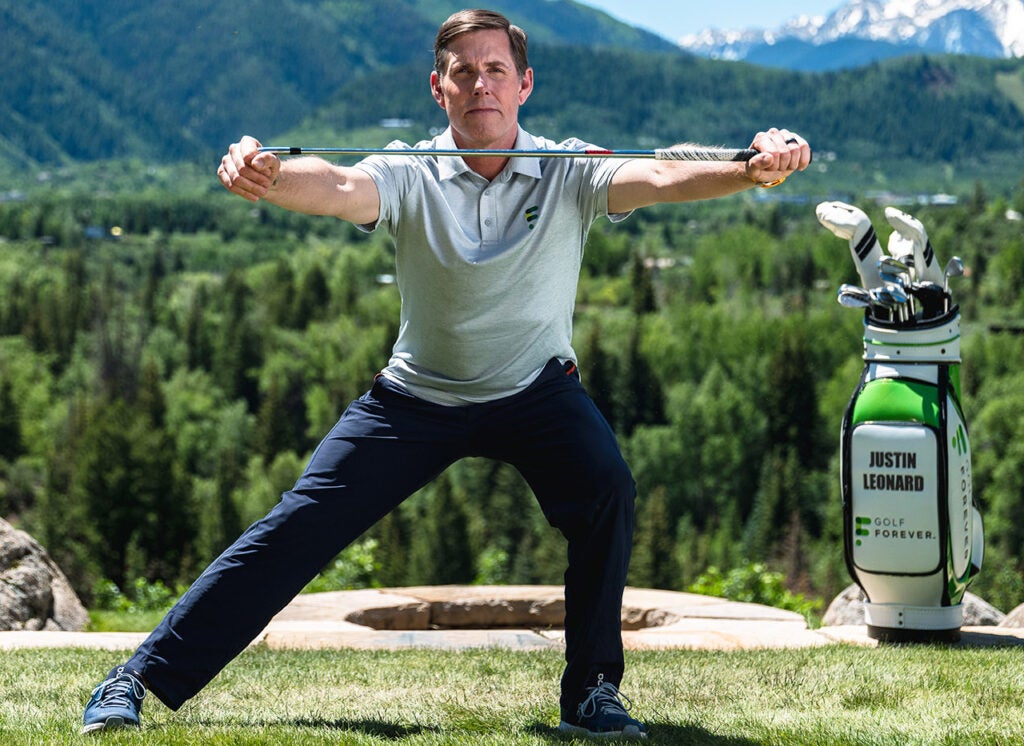
Rehabbing has been what they call âa process,â often frustrating and frequently painful but also educational. Just last week, my colleague Luke Kerr-Dineen, Golf Magazineâs director of game improvement, introduced me to something Iâd not yet tried. Itâs called GolfForever, a customizable digital golf fitness program. The siteâs robust video archive includes an array of instructional classes, led by experts in the field, that help you build your strength, flexibility, power, consistency—everything you need to get your body golf-ready and keep you injury-free over the long haul.
In the short term, Iâm just hoping it will help me get back on the course. Though Iâve just gotten started on my road to recovery, the program has already renewed my hope by tuning me in to invaluable fitness fundamentals. Here are three lessons Iâve picked up so far.

12-month GolfForever subscription
1. Personalization Matters
The greatest strength of the internet is also its more glaring weakness: you can find anything. Type âgolf fitnessâ into Google, and the search engine will generate an avalanche of generic options. Problem is, everyone is different. Better to find a program that can be customized around your age, abilities and limitations.
2. Form Is Everything
In a desperate effort to get my shoulder back in working order, Iâve tried all kinds of at-home exercises, including resistance work with bands and dumbbells. Not much luck. In some cases, in fact, the exercises seem to have set me back. I suspect it has something to do with my mechanics. Proper form is paramount, after all. Do all the exercises you like. They wonât do you much goodâ they might even do you harmâif youâre not doing them right.
3. Keep it Pragmatic
A lot of fitness programs can be time-consuming and intimidating. Iâm all for dedication, but Iâve also got limits. At this point, Iâve realized the importance of finding a realistic program, one that fits not only my physical abilities but also suits the rhythms of my life.