
In 1744, The Honourable Company of Edinburgh Golfers drafted the first Articles and Laws in Playing at Golf. Itâs a fun and colorful read rich with talk of horses, adversaries and misfortune. A different time, no doubt. The Honourable Company gave us only 13 rules, but their document serves as a Magna Carta of sorts for how we play today. The general ethos: play the ball as it lies, play the course as you find it. That was then.
The rules have had to be revisited for several reasons in recent years, advancements in technology and course architecture chief among them. The Honourable Company didnât contemplate free relief from paved cart paths or electrical boxes, for example. Or high-definition super slow-motion that can capture infractions undetectable to the naked eye. As the game has evolved so have the rules. But the rules arenât perfect and too often we disregard their spirit (see: intent to anchor). We must defend the rule book, not mold it to our liking.
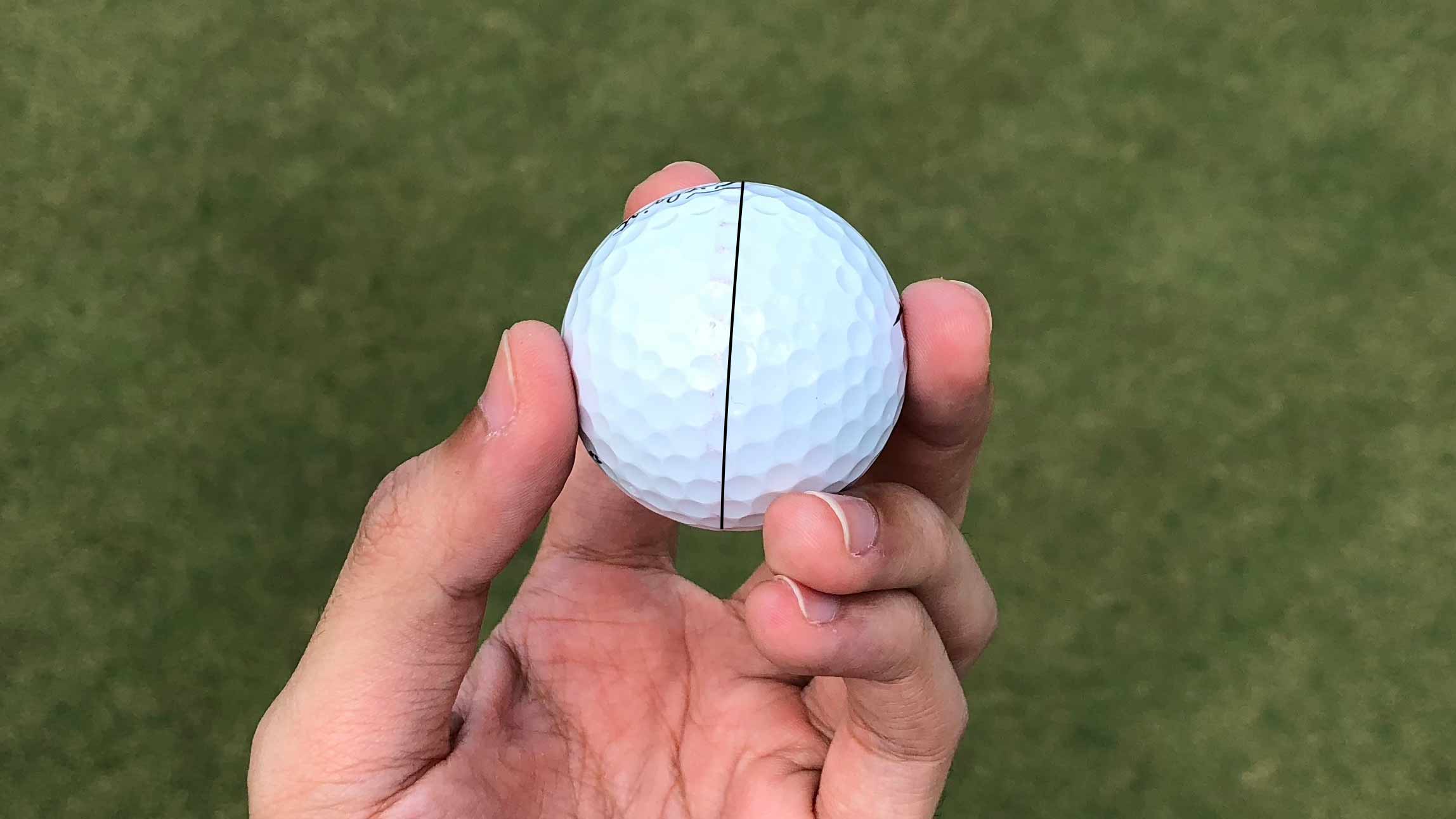
One wrong that should be made right: prohibit players from marking their balls with a line that may be used an alignment aid.


Bryson DeChambeau, fire ants and the ‘Dangerous Animal Rule,’ explained
Why? Because itâs not legal. To be fair, itâs not illegal, either. In fact, the act of applying a line to your ball with the intent of it helping with alignment isnât specifically addressed anywhere in the rules (it was before 2019, but no longer). But it feels unfair â at least it does to this golfer! â and that should mean something.
So, here we are with an opportunity to address the situation.
Words matter. The first word that matters in this discussion is object: an object is a material thing that can be seen and touched. For example, a line is an object. Specific to this matter, the alignment line a player might put on his or her ball is an object, or at least it should be considered one.


The Rules of Golf are clear on objects used for alignment. From Rule 10-2b (2): âThe player or caddie must not set an object down anywhere on or off the putting green to show the line of play.â When a player sets down an object â like a line on a ball â to show the line of play, that, in effect, violates Rule 10-2b, or at the very least the spirit of Rule 10-2b. (The rules-makers will tell you that they donât believe a marking is an object, even if that credo is not explicitly spelled out in the rule book. Therefore, they contend, aligning a ball with either a Sharpie line or manufacturer’s logo isnât a breach of 10.2b (2).)
What complicates the matter is Rule 6-3a, which, as stated in the Rules of Equipment, âencourages the player to put an identification mark on his or her ball to help ensure that he or she plays their own ball throughout the round. There are no regulations to limit what or how many markings can be applied to the ball by the player, provided its original markings can be discerned.â
No regulations to limit: You could draw a star, a heart, initials, a straight line around the equator of the ball that youâve sonically checked for âtrue center,â whatever you want. Again, words matter. But make no mistake: That straight line isnât being used for identification, like initials might be. That line is being employed for alignment â and thatâs outside rule 10.2b, or at least it should be.

Rules Guy: Can I use the flagstick’s shadow as an alignment aid?
But wait! Thereâs more contradiction in 14.2c/1, which reads, âthe ball may be aligned in any way when being replaced (such as by lining up the trademark) so long as the ballâs vertical distance to the ground remains the same.â Listen, people have been lining up the trademark for decades but thatâs not the same as drawing an object to serve as an alignment aid on your ball.
Ironically, what is much clearer than the tangled and nebulous relationship between 6.3a, 10.2b and 14.2c is the intent of the rules. They donât exist to make the game easier. The purpose of the rules, at least according to former USGA president Richard Tufts, âis to make sure, as far as possible, that everybody plays the same game.â Among other feats in golf, Tufts wrote The Principles Behind the Rules of Golf, which literally makes him the guy who wrote the book in this regard. In fact, I think itâs safe to say both Tufts and at least one of his successors, Sandy Tatum, would frown on the lines we see on so many balls today. And yet, our game tolerates the act.
I can already hear your counterarguments! Kindly allow me to address them:
Keep the line! Fans want to see more birdies!
The people you see on TV could make putts with grapes. Itâs not going to hurt the best players in the world at all. In fact, as Tatum would have wanted, it will help identify them (plus theyâll play faster).
Next youâll come after the line on my putter or driver!
Club markings are already addressed in the Rules of Equipment. Plus, surely you can see the difference between an object you carefully place on the ground (to aid in the alignment of your body and stroke) and a decorative arrow on a 460cc driver that you blindly swing around your body at 90+ mph.

Jon Rahm penalty should have been handled differently, ESPN announcers say
We need the line because it helps build better players to grow the game!Â
You can and should use a line on the practice green because thatâs the place for it. Not a game, not a game, not a game. Practice. We talkinâ about practice.
I know this is an unpopular and polarizing position that will certainly draw criticism and defensiveness from the line-users of the world. Please hear me when I say this: I understand you. I do not blame you. I was one of you! We simply subscribed to the rule book they gave us.
But this game isnât just about us. Itâs about an adherence to the overarching rules that have been around for centuries. The spirit of The Honourable Company of Edinburgh Golfers and the writings of Tufts may be 200 years apart but they donât differ much. Thatâs our game. We owe the game more respect than to let loopholes override the rules that, as Tufts asserted, âmake sure, as far as possible, that we are all playing the same game.â