
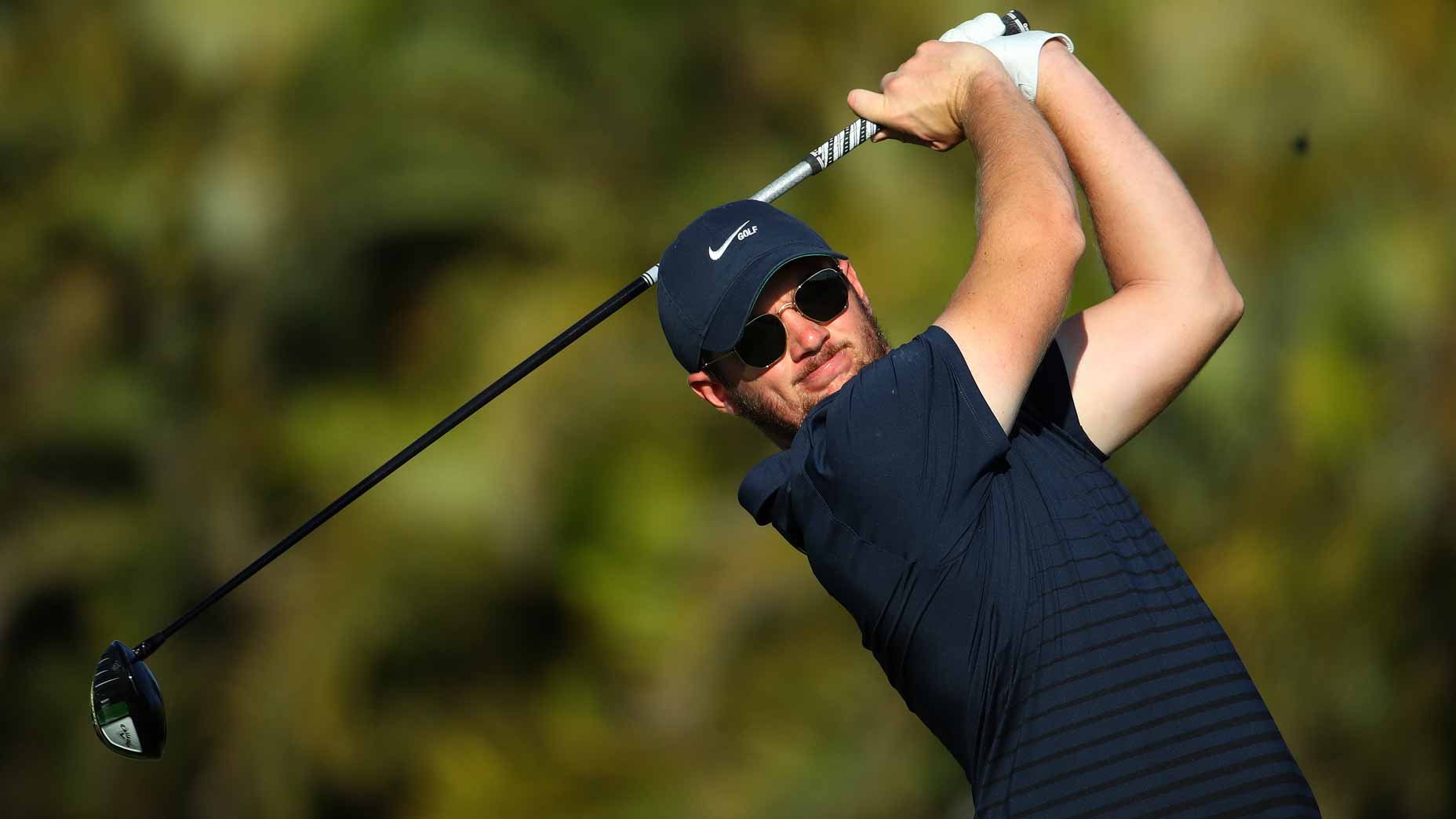
Iâve known Sam Horsfield, a two-time winner on the European Tour, since he was 15 years old, when fellow Englishman Ian Poulter took him under his wing and became his mentor. Almost 10 years on, his game is as good as anybodyâs Iâve ever seen. Heâs so talented.
Sam is a pure athlete. He can spike a volleyball, and heâs athletic enough to be a starting quarterback in college. But when he came to me, he had been having on-and-off back pain. Then, last year on the European Tour, he hit a tree root as he was making his swing. The club stopped but everything else kept moving. The energy from the club went back into his body, resulting in a torn disk and damage to the facet joint in his back. It was a really unusual injury, but itâs what happens when your body goes into full acceleration mode and then stops unexpectedly.
Samâs healthy again, has had his gear dialed in with the help of True Spec Golf, and heâs working hard on injury prevention with Dr. Craig Davies and ways he can take full advantage of his physical gifts without straining his back. Samâs a very rotary player â he turns as well as anybody Iâve ever seen (see sequence, below). This is a good thing, because golf is a rotary sport, after all. Thereâs still work to be done, but heâs making great progress. At this rate, the golf world will know about him in no time.
Here are six keys to Sam’s swing.


1. Top
Sam has a tendency to âstackâ on his left side and set the club with too much wrist hinge. Weâre working on feeling âtallerâ here, with less wrist hinge (I call it the Steve Stricker position), and feeling like 90 percent of his weight is on his right leg. (Photo: Christopher McEniry)
2. Mid-downswing
Sam also has a tendency to get steep â weâre working on getting less narrow here and wider with his arms and his wrists (i.e., farther from his body).
3. Pre-impact
Because of the width maintained in the downswing, you can see Samâs arms starting to straighten. The effect this has is less right-side bend, which will continue to help his back.

4. Release
Samâs a strong rotary player â weâre working on getting him less vertical here. But hey, heâs rotating and has fully released his right arm. Thatâs really what itâs all about: give yourself enough time to âthrowâ the club at the ball. (Photo: Christopher McEniry)
5. Post-impact
Sam looks taller here than he used to, with more space and a full release of the club with his right arm. When he was stacked on his left leg with so much lag, heâd have to âsnapâ his left leg straight. Lesson: the less compensations the better.
6. Finish
Samâs a good athlete, and you can see it here. His weight has shifted to his front side, heâs standing tall and continuing to rotate. He knows where this ball is going: dead at the pin.