
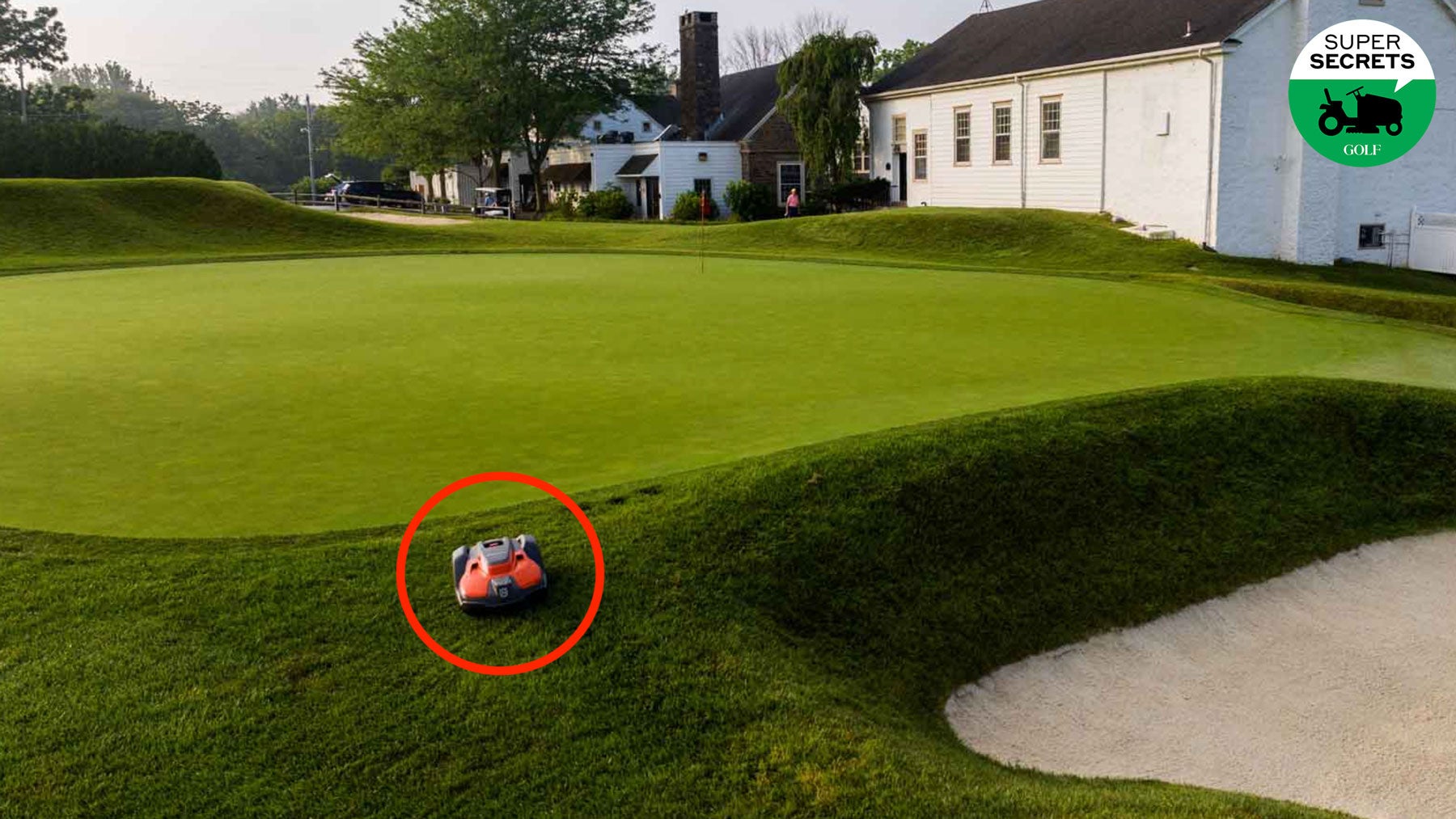
The robots arenât coming. Theyâve arrived. Some have found jobs in the golf industry.
At Philadelphia Cricket Club, for instance, a fleet of autonomous R2-D2s has been helping mow the grass for the 2024 U.S. Amateur Four-Ball Championship, which starts Saturday.
Dan Meersman is director of grounds and facilities at the club. We asked him about his robot maintenance staff, the jobs they can â and cannot â handle, how they’ve worked with the USGA to help prepare for the event, and the roles he sees machines like them playing in the future of the game.
Hiring process
Like the prospect of flying cars, the promise of robot mowers has been with us for some time, gaining traction as the machines have gotten lighter, faster, more precise and easier to use. Meersman first saw one in action in 2019 and was impressed enough to acquire two units for Philly Cricket the following year. Meersman, who lives on property, put one of those mowers to work in his yard. âI got the chance to see it working in rainy conditions and all other kinds of weather,â he says.
A pivotal moment came when Meersman saw a deer standing in the yard, unbothered as the robot went about its business. âThatâs when I realized, if the deer didnât care that the robot was right next to it, golfers wouldnât be bothered by it, either,â he says. âI equate it to a squirrel or some other small animal thatâs off to the side of your play. Itâs quiet, unobtrusive. You donât even really notice itâs there.â Today, Philly Cricket has a fleet of 30 robot mowers, in two different models, all manufactured by Husqvarna.Â
Tournament-related tasks
In the run-up to this USGA championship, which is being played on the clubâs A.W. Tillinghast-designed Wissahickon course, the rough was mown by 17 robot mowers, Meersman says, though some last-minute fine-tuning was handled with traditional mowers, which have a suction function that helps the grass stand up straight. As play unfolds this weekend, the robot mowers will be called upon as needed, depending on the weather and any related tweaks the USGA championship committee might decide are needed.
Every-day operations
Philly Cricket has three courses, and robot mowers help cut the rough on all of them throughout the season, typically to a height of two-and-a-half inches. The GPS-guided machines work by day and night. âThatâs one of the really nice things,â Meersman says. âYou show up in the morning, and a lot of the work has already been done.â Whatâs more, the smaller of the two robot models, which are roughly the size of push-mowers, are so light, Meersman says, that they can operate in rainy and wet conditions without damaging the grass. Those are the mowers that cut the rough (Meersman uses his larger robot mowers to help maintain other parts of the property, including the clubâs 21 grass tennis courts). By the end of this season, Meersman expects to expand robot-mowing to the point where all the rough on the Wisshickon course will be cut autonomously.
Workloads and capabilities
Meersmanâs robots work âthree-quarters on, one-quarter off,â meaning that they mow for three hours and then charge for an hour. The smaller models he uses in the rough are capable of mowing 2.5 acres per hour.


6 grass types every golfer should know, and how each affects your game
What they donât do
Robot mowers can cut fairways, too. But Meersman confines his to the rough, where he says he gets high rewards at low risk. Nor does he use his mowers on steep slopes or bunker edges, though there are autonomous mowers on the market designed with those types of tricky areas in mind. Greens are another story altogether. Meersmanâs robot mowers have rotary blades, while putting surfaces are cut with more precise reel mowers. Things will surely change as technology improves. But Meersman says, âif weâre talking about totally unsupervised, autonomous mowers, I think weâre still some years away from being able to do greens.â
Costs and savings
Meersman declined to say what his robot mowers cost, in part because prices can vary depending on a range of factors, including the relationship between a club and a manufacturer, and how many machines are part of a deal. (The smaller robot mowers Philly Cricket uses are listed online at around $2,600 per unit.) Besides, what interests Meersman more are the savings. In many industries, the rise of AI has raised fears of robots taking jobs from people. But thatâs not how itâs playing out at Philly Cricket, where Meersman says autonomous mowers have allowed him and his staff of 70 to focus on other course improvements. âWe can now consider things like, letâs not just put sand and dirt into divots, letâs use plugs from our nursery,â Meersman says. âIt opens up all kinds of opportunities.â
Across the industry, he concedes, some course operators and management companies may see robots as a chance to cut staff and save on salaries. But as much as anything, he says he expects autonomous mowers to promote healthy competition among clubs to produce the best possible conditions.
âYouâre not going to be looking to cut back on maintenance,â he says. âYouâre going to be making sure youâre not getting outdone by the course down the street.â