
Itâs 31 degrees in San Antonio. Freezing rain has turned to sleet, and tiny pellets whiz past the front of the hitting bay at Dead Solid Perfect, an unassuming driving range with an increasingly flooded landing area. Abraham Ancer, the 27th-ranked golfer in the world, corrals another ball from the pile in front of him.
âOkay, Iâll hit a high draw,â he says. He closes his stance, stares down his line and takes a rip with 7-iron, launching a beat-up golf ball toward a distant blue target. The ball turns right to left mid-flight, just as he said it would, before the brutish sideways wind knocks it from the sky.
âNow the high cut!â Again, he sends a ball soaring, this one starting straight and falling right, landing with a splash.
San Antonio isnât supposed to get this cold. A gust sends sleet in our direction, coating him with a freezing mist. He yelps but smiles, pressing on through an entire bucket of balls, sharing his swing thoughts, warm-up routines, preferred shot shapes. Then he flips me the club, laughing as he sees me shivering.
âYour turn!â


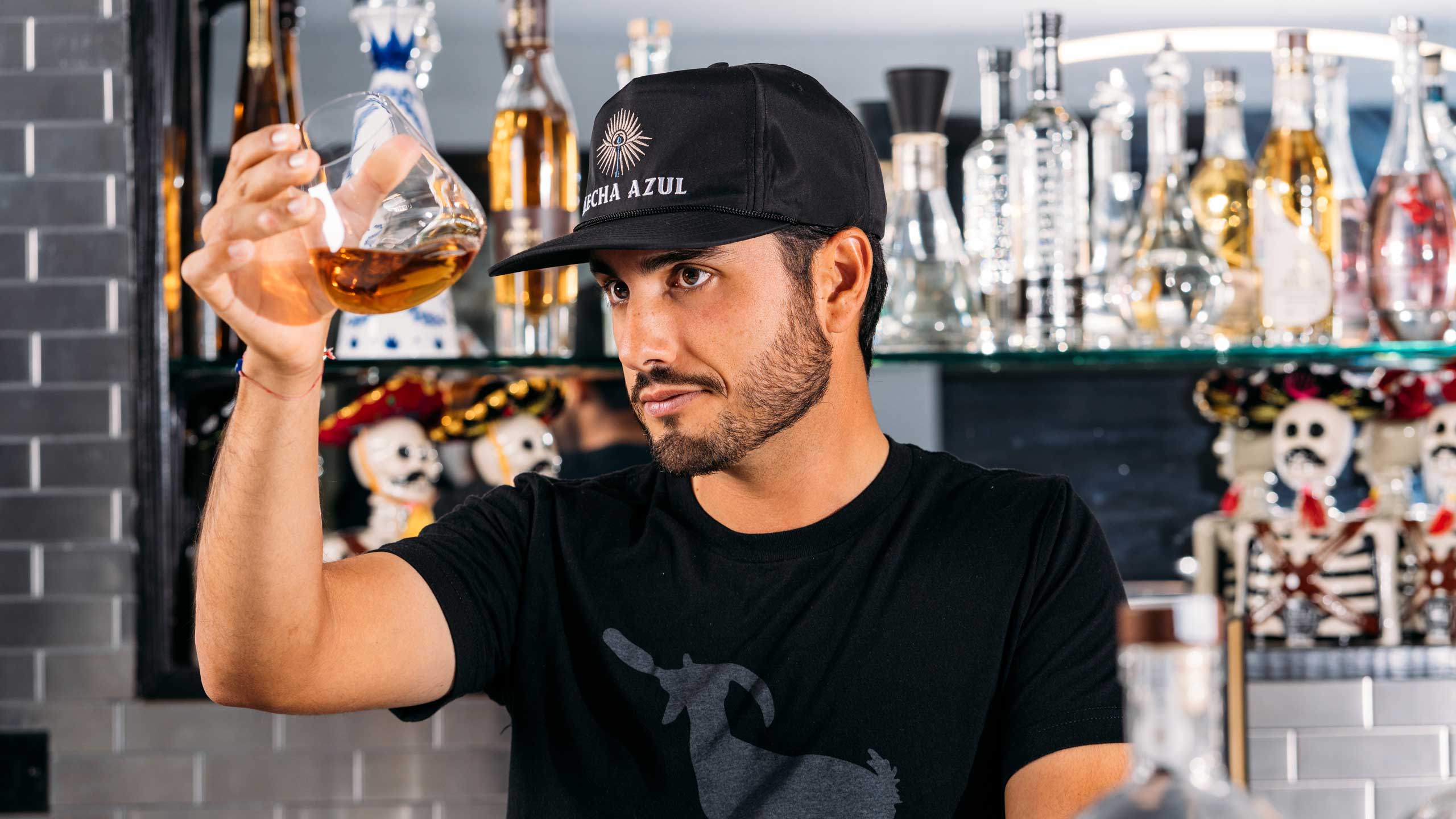
If Ancer seems surprisingly at ease under the circumstances, thatâs because he is. This is his driving range â he and a friend bought Dead Solid Perfect, a San Antonio mainstay, several years ago. Itâs his golf swing, too. Ancer has never had a swing coach, which means his action is his own. And thereâs the bottle of tequila sitting nearby, which Ancer cracked open just after 9 a.m. Thatâs his too; Ancer is cofounder of top-shelf Flecha Azul. âHeavy pours only,â says the eager host, as he hands over a glass of liquid gold that warms us from within.
Most top pros wouldnât step out of their homes in these frigid temps. Ancer isnât most top pros. âLook! I trimmed my beard for you guys,â he says. âWeâd better get some good photos out of it.â
Casual golf fans were introduced to Ancer in November 2020, when he played so well in his Masters debut he was T-2 entering the final round. He cut a striking figure alongside that dayâs playing competitor, Dustin Johnson, whoâs nine inches taller, 30 yards longer and owns 28 worldwide wins to Ancerâs two. Ancer, who just turned 30, may not be golf âs longest or youngest rising star, but heâs learned to embrace his underdog status. Thatâs how he made it to golf âs most vaunted tee time, the final group on Sunday at Augusta National, from a world away.


Ancer was born in McAllen, Texasâ southernmost tip, but grew up just across the border in Reynosa, Mexico. His father, Abraham Sr., who hustled to keep his family solidly middle class, caught the golf bug in his 20s and regularly brought his son to Reynosa Country Club while he was still in diapers, hoping heâd fall in love with the game through osmosis. It worked.
Ancer fondly remembers the afternoons theyâd while away at the course. Dad would play 18 with his friends while his boy hung around the practice area. Then theyâd play nine together. After, while his father played cards in the locker room, Abraham would be outside with his friends, chipping and putting as night fell.
âSometimes it would get to, like, 10 or 11 p.m. before weâd drive home,â he says. âNot just when it got dark. Way past that.â

Plenty of Ancerâs lifelong motivations are rooted in those days: his love of a lengthy practice session, his sense that life is meant to be enjoyed, his desire to make golf more accessible for kids of all backgrounds.
At the time, there was no guarantee heâd have a future in golf. But as Ancer kept getting better, his family did everything they could to give him the opportunity. That meant earning extra money to pay tournament fees. But the AncersâAbraham Sr., his wife, Veronica, and young Abrahamâs sisters, Claudia and Sayraâspecialized in a far scarcer resource: belief. Whenever someone pointed out the long odds of a kid from Reynosa making it to the PGA Tour, Abraham Sr. would smile, unworried.
âThatâs where heâll be,â heâd say.


Ancer knew heâd need to leave Reynosa for his golf dreams to blossom. In 2005, at age 14, he took advantage of his dual citizenship to attend Sharyland High School in Mission, Texas. Ancerâs uncommon level of discipline stood out to the schoolâs golf coach, whoâd never seen anyone quite like him.
âI just always loved it,â Ancer remembers. âI think thatâs what helped me get to where I am. The fact that I actually enjoyed going out there by myself, practicing, practicing, practicing.â
Other parts of high school came less naturally. Ancer, who spoke limited English, vividly recalls feeling petrified in his first speech class. âThere were days that I remember just feeling really uncomfortable,â he says.
Despite a standout high school career, Ancer received just one offer to play college golf: from Odessa, a junior college in west Texas. He accepted immediately and made the most of his year there, winning medalist honors in six events, including one stretch in which he won five of six starts. By the time heâd won the Jack Nicklaus Award as the nationâs top junior college player, Ancer was on the radar of D1 coaches. He ended up transferring to Oklahoma, where coach Ryan Hybl said it took him âabout two holesâ to realize what kind of golfer heâd added to his roster. Ancer thrived as a Sooner, too, winning twice in his first season. Heâd go on to post the second-lowest career scoring average in OU history, behind only Anthony Kim.
After graduating in 2013, Ancer went directly to Q-School, where he earned conditional status on the Korn Ferry Tour for the following year. But just as his pro career began, the unimaginable happened: Abraham Sr., his partner in dreams, died of a heart attack. The loss hit him hard.
âStill, to this day, it angers me a little bit,â Ancer says. âAnd it makes me sad. I know my dadâs watching me play, but not being able to share itâman, I really, really miss that.â
The playing season was a wash, but that fall he made it through Q-School, earning full status on the Korn Ferry Tour for the 2015 season. In his fourth start, he finished second in Brazil. Three months later he earned his first professional win in Nova Scotia. He was guaranteed a PGA Tour card.
Of course, getting to the PGA Tour and staying there are two different things. Ancer arrived wide-eyed at the 2015 Safeway Open for his first Tour start. As he warmed up on the range that chilly first morning, Rory McIlroy set up next to him.
âHe started hitting 5-irons, and the ball is taking off like, whoosh, flying 220 into the wind,â Ancer says. âI was like, âThatâs insane. Thatâs not the kind of game I have!â âAncer started making changes. He tweaked his equipment and his swing, trying to hit the ball higher, harder, farther. He missed his first eight cuts. âIt was terrible. I played some of the worst golf that I really ever played,â he remembers.

It took a year of relegation to Korn Ferry for Ancer to recapture his game. By the time he re-earned his Tour card, heâd made some subtle, critical changes. He controlled his distances better. He sharpened his short game. He took better care of his body. Most importantly, he learned that improving his own game was more effective than stealing someone elseâs.
In the three years that followed, Ancer developed into one of the Tourâs steadiest players. In 2018, he posted a handful of top-fives and scored his biggest win yet at the Australian Open. The next year was even better: He qualified for the Tour Championship and became the first Mexican golfer to compete in the Presidents Cup, where he dazzled an international audience with a 3-1-1 record.


Off the course, Ancer began taking his not inconsiderable Tour earnings â nearly $10 million to date â and giving life to the entrepreneurial streak heâd inherited from his father, who sold everything from cars to security systems in his whatever-it-takes career. At the Fort Worth Invitational in 2018, a chance pro-am pairing with Aron Marquez, the Mexican-born CEO of Wildcat Oil Tools, turned into Flecha Azul. Other expansive projects followed, some in the business worldâlike Black Quail Apparel and an innovative distribution deal with clubmaker Miuraâsome on the home front, like his 1,500-acre Hill Country ranch and the man cave he tricked out in his San Antonio digs.
Side gigs are sometimes distractions for pro golfers. Ancer insists these pursuits have lifted his game. âIf Iâm only focused on golf, it can drive me insane,â he says. âMy other businesses help me stay focused on whatever Iâm doing at the moment.â


Ancerâs approach worked wonders in 2020. In 21 starts, he posted more runner-up finishes (two) than missed cuts (one) and rose to a career-best 20th in the world rankings. Better yet, he got to test his game on golf âs grandest stage when he qualified for his first Masters.
He looked shockingly comfortable in his first week at Augusta National, playing his way into Sundayâs final groupâonly to fade to T-13 with a final-round 76. Heâs relieved heâll get another chance this April. Asked what part of golf makes him the happiest, Ancer heads back to that moment. âYou feel a lot of emotions, more than really anywhere else, when youâre in contention,â he says. In Ancerâs mind, his career is just beginning. And when heâs building, heâs thriving.
If he ever allows himself a moment to do so, Ancer might reflect on what heâs already built â a burgeoning business empire, a diverse group of friends, an airtight golf game, a career every Mexican golf fan can point to with pride. His preference, though, is to keep his head down. He gets recognized in public more often since contending at the Masters. But he also knows just how fine the line is between being a good golfer and a great one.
At home, three trophies sit in the corner of Ancerâs office. Two mark his professional victories. The third comes from winning the Reynosa Club Championship as a teenager. To figure out where heâs going next, heâs determined to never forget where heâs been.