
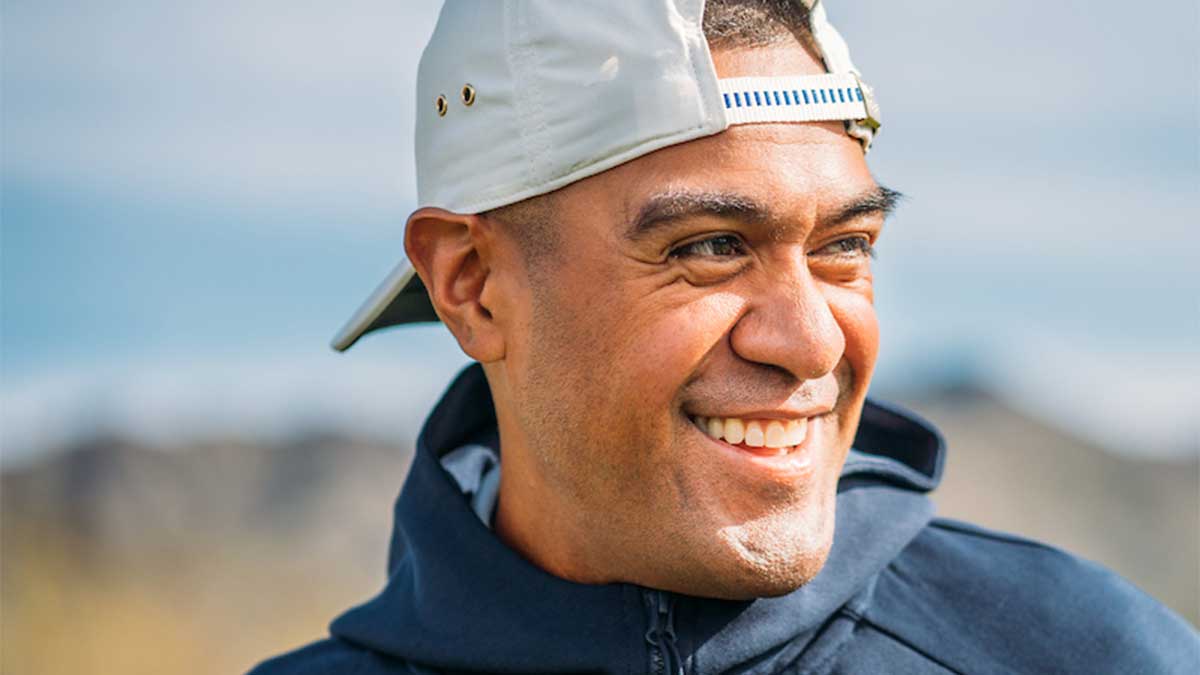
Tony Finau peers across the range to a group of golfers at the other end, some 320 yards away. In other words, a safe distance â for most golfers.
âWeâre downwind,â he says. âSo I can really only hit, like, 6-iron.â
Itâs our photo shoot, but heâs in charge. He picked the time (9 a.m.), the place (Silverleaf, in Scottsdale), the outfit (the one you see on the cover of our May magazine). He looks decidedly comfortable in this atmosphere; answering rapid-fire questions while having his picture taken. The first impression you get from Finau on a golf course is that of power. But the second feeling â that comfort â is more enduring.
Itâs infectious, too. Finauâs here to have fun. To talk smack. Gary Woodlandâs name comes up, and his recent claim (during a taping of GOLF.comâs âSubparâ) that, in a hoops game to 11, no other golfer would get past 4 with him. Finau laughs. âWoodland can claim to be the best because heâs the only guy who played in college,â he says. âIâm bigger, taller, faster, stronger and more athletic. Iâll take him anytime.â
The powerâs been there a while. The comfort took longer. Itâs only in recent years that Finau, 30, has become one of golfâs household names, but heâs been at all of this for quite a while. He turned pro nearly half his lifetime ago. To see him here, pummeling balls into the Arizona sun in a freshly pressed Nike hoodie and out-of-the-box size 14s, it feels like this was always how it was supposed to turn out. Like it was inevitable.
It wasnât.
There are a select few in the game of golf whose origin stories sound like fables. Tiger Woods broke 80 at the age of eight. J.B. Holmes joined his high school golf team in third grade. When Rory McIlroy was 15, his father wagered heâd win the Open Championship within 10 years â and he did.
With the legend of Tony Finau, where do you even begin?
Thereâs young, never-played-golf Tony, spinning a lit fire knife in his hands, moving to the music. Heâs learning hand-eye coordination â the high-stakes kind â by way of a tradition of his Samoan heritage: fire-knife dancing. Heâs learning that sometimes, even when youâre trying your hardest, things hurt. Heâll keep learning this.


Thereâs eight-year-old Tony, headed to the garage with his younger brother Gipper and his father, Kelepi, at their home in Rose Park, a tough neighborhood of Salt Lake City. The Finaus are inspired by the young man of color whoâs just won the â97 Masters, but thereâs no way they can afford range balls, not when you consider how many they plan to hit. No matter: Theyâve made their own range. Itâs comprised of a mattress and a net and every golf-related video and book they could find at the library. The Bash-Bros-to-be hit there for two, three, four hours a night. They canât see where the balls fly, but â hoo boy â do they learn the feel of a perfect strike.
Thereâs Tony on his graduation day in 2007 â 17 years young, playing golf several hours from his high school. Heâd always figured college was in his future â BYU or UNLV, maybe â but something has come up. An opportunity. His parents have accepted a businessmanâs offer to front the $50,000 stake for a big-money Las Vegas made-for-TV exhibition. He wins $100,000. His amateur days are over.
Thereâs Tony, six weeks later, playing at the U.S. Bank Championship in Milwaukee. No. 16 is 380 yards, downhill. John Daly always wanted to drive the green but never quite could. Each day, fans queue up to watch Tony take it on. He likes a crowd. He hits the green three days and finds the greenside bunker the fourth. He leads the field in driving distance that week, and itâs not close.
Thereâs Tony, with Gipper at his side, two young pros at the peak of their powers, taking on Utahâs Wingpointe Golf Course on a mild midwinter day. No. 7 is a 531-yard par 5, and itâs downwind and firm. Gipper mashes a high draw down the middle. Tony does the same. âWe both grew up killing the ball,â he says. They drive toward the 150-yard marker. They keep driving. Tonyâs on the front edge of the green. Gipperâs by the back fringe.
I have a lot of faith â I’m always hopeful. I think that’s why I am where I am.

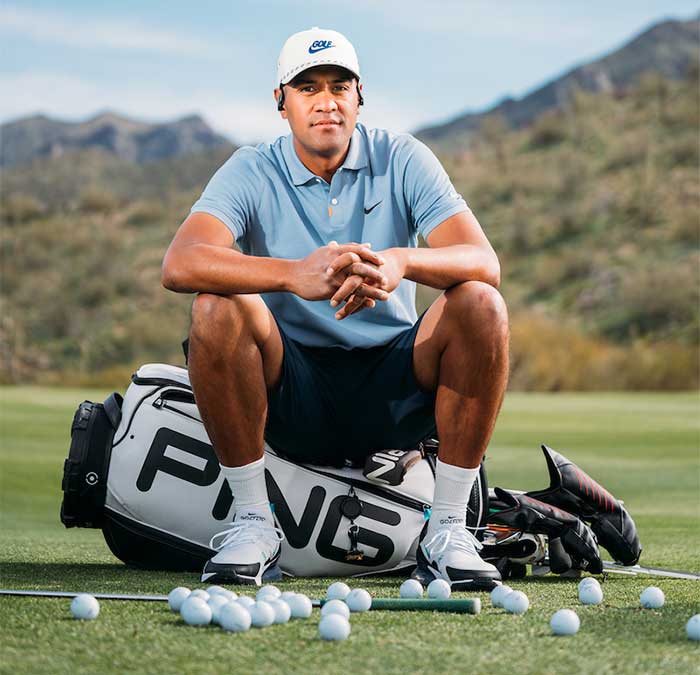
Thereâs Tony at 28, a father of four, celebrating a hole in one at his first-ever Masters. Itâs the Wednesday before play starts, and heâs aced No. 8 in the Par-3 Contest, and then â gah! â youâve seen the rest in replays. His ankle turns sideways, fully dislocating, drawing shrieks from the crowd. Acting out of instinct, out of embarrassment, he pops it back in. His tournamentâs over, surely, in heartbreaking fashion. Except then he shoots 68 the very next day, and he shoots a Sunday 66 to crack the top 10. Who does that? Who does any of this?
There are legends and there are expectations. Itâs dangerous, getting as good as Finau has. Expectations get thrown out of whack. An uncomfortable word gets tossed around: underachiever. Finau has recorded five top 10s in his last eight majors. In his last three and a half Tour seasons, he has been the runner-up seven times. But heâs won zero times over that stretch. His lone victory remains at the opposite-field Puerto Rico Open in 2016. He insists heâs not worried by the close calls. âI have a lot of faith â Iâm always hopeful,â he says. âI think thatâs why I am where I am.â Still, his reward for becoming a top-15 player in the world is that he now has to answer some version of âWhy donât you win more?â every time he steps to a microphone.
Those expectations exist in a bubble. They donât factor in the five times Finau went to Q-School and came up short. They donât consider that before him, no player of Tongan or Samoan descent had ever played on Tour. They look past the fact that Tony has ascended to the top of the game while Gipper â the youngest player ever to make a Korn Ferry Tour cut at age 16 â has never earned status on any tour, a casualty of the pro ranksâ razor-thin margins. The names of midsize North American cities roll off Tonyâs tongue: Calgary, Alberta. Kingston, Ontario. Midland, Texas. âYou want firm? Head out to Midland. Thatâs, like, Texas links!â These are hardly big-time PGA Tour stops, but theyâre places heâs contended in tournaments. He has been blessed with talent, for sure. But none of this was a given. Every day, he overachieves.
Forget legends and forget expectations. Here is Tony Finauâs reality: Before every round, he makes sure to do one thing: say a prayer. A member of the Church of Latter-Day Saints, he asks for consistency in his thoughts and the ability to enjoy the moment. Nothing about scores. After rounds, Finau shifts his focus to helping his wife, Alayna, shoulder the challenges of raising four kids, each under the age of 10. Their focus is on helping him, too. Family. Faith. Golf. These are Finauâs priorities. âIn that order,â says his coach Boyd Summerhays. âHe takes what he believes pretty seriously.â


Wherever golf sits on his priorities list, the reality is that Finau has developed a near-bulletproof game. Under Summerhaysâs guidance, heâs harnessed that power. His irons, his wedge game, his feel shots â theyâve never been better. The key isnât the power, anyway â itâs the contact, honed against a mattress in the garage. When his streaky putter cooperates, there is only a short list of players who can keep up.
And the reality is, he keeps plenty of gas in the tank. On Tour, most of Finauâs swings look like chip shots. âThe shorter the swing, the less you can mess up,â he points out. They still carry 300 yards. After once watching him record 180- to 182-mile-per-hour ball speeds on several consecutive drivers, Ping Tour rep Kenton Oates recalls asking him to dial it up even more. âAnd just like that, his next swing was 194 mph,â Oates says. âMost guys have 2 to 3 mph left in the tank. Heâs got 15, at least.â Finau hit 200 mph shortly thereafter.
The reality is, Finau has a good chance to make his third consecutive U.S. Team when this yearâs Ryder Cup rolls around. Last time, Summerhaysâs son Preston made the junior team. That was cool for both of them. Tony calls Preston all the time to see how heâs playing. âHeâs a ridiculously generous guy,â his coach says.
The reality is, Finau dived into professional golf to make money, to help his family. Heâs made nearly $20 million in PGA Tour events. Heâs plenty comfortable out here now. Heâd like to stay a while.
Oh, and that question heâs getting sick of? Whenâs that big win coming? Heâs found an answer, one he believes, and heâs ready to use it at his next tournament â whenever that will be.
âThis week!â
To receive GOLF’s all-new newsletters, subscribe for free here.