
Golf has a rich history of attracting people who work tirelessly to nourish the game, often in complete anonymity. Below are five such individuals in the design space. Titans of architecture? Maybe not. But each has left a legacy of excellence that has forever enhanced the game.
Horace Hutchinson (1859â1932)
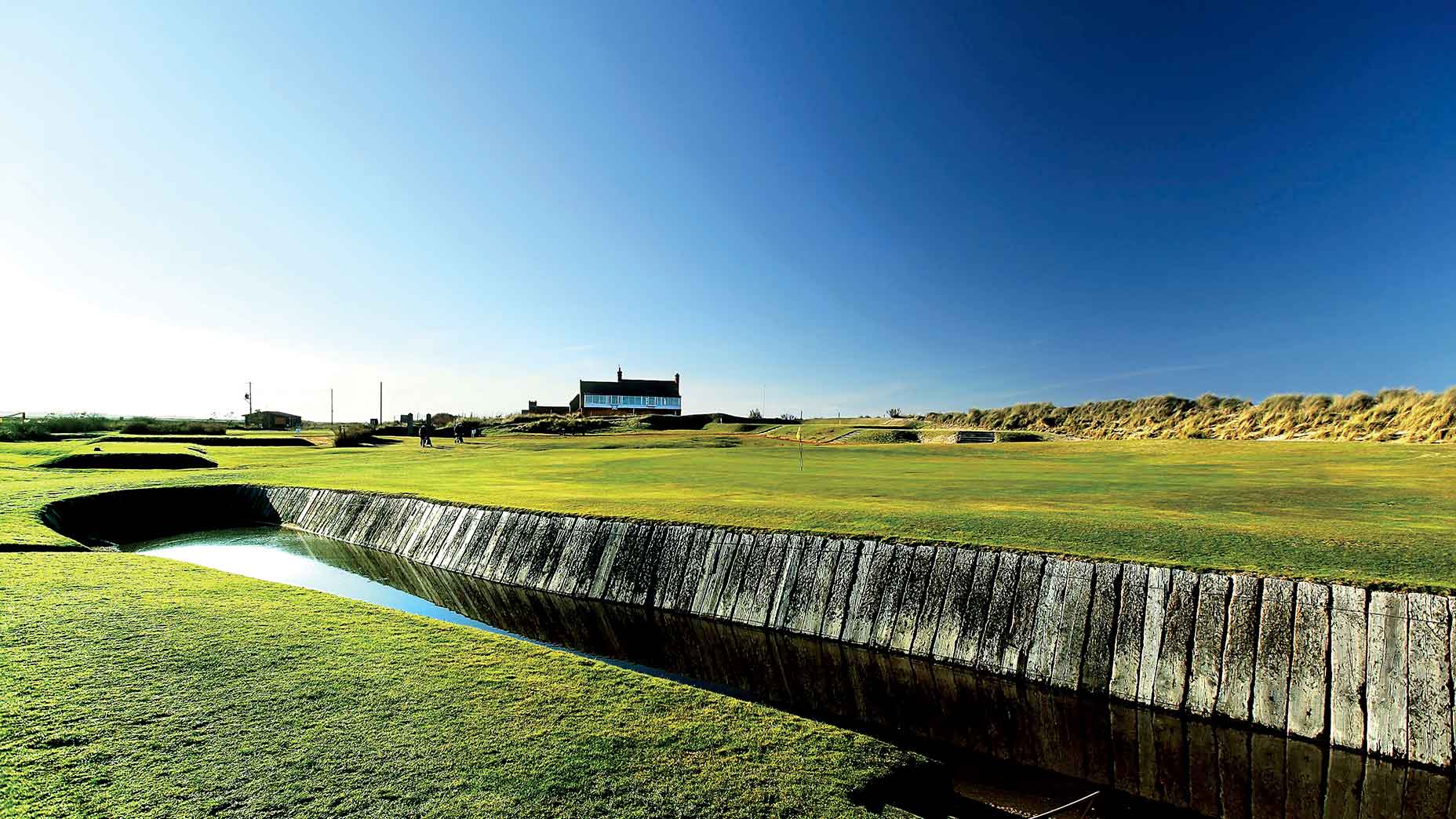
The two-time British Am champ (back to back, no less) lent his expertise to several worthy designs, the most notable being Royal West Norfolk in the U.K. (1892). In addition, he wrote nine books on golf and served as the editor of Country Life. Through this widely read periodical, Hutchinson espoused his favorite design features while inviting some of the gameâs early luminaries, H.S. Colt and Herbert Fowler among them, to do likewise. The printed conversations laid the foundation for the Golden Age of Architecture and improved greenkeeping practices. The sobriquet â âthe grandfather of architectureâ â at least via the written word, is legit.
George Wright (1847â1937)
Before Boston had Bobby Orr, Ted Williams or Tom Brady, it had George Wright, who introduced the concept of municipal golf to Beantown at Franklin Park in 1890. Nearly four decades later, Wright, an MLB Hall-of-Famer considered the best player on the first professional baseball team, the 1869 Cincinnati Red Stockings, set the stage for Donald Ross to construct George Wright GC, also in Boston. (Ross revamped Franklin Park, too, in 1923.) Does Ross deserve the design credits? Yes, but it was Wright and his municipal leadership â and belief that all players should enjoy elite architecture â who helped foster the public game.


John Low (1869â1929)
In architecture circles, Stuart Paton is revered for his efforts at Woking GC outside London (1893). Lest we forget his partner, however, fellow Scot John Low. Born some 13 miles north of St. Andrews in Dundee, Lowâs exposure to The Old Course formed a basis for much that was to come. An eloquent writer, his book Concerning Golf (1903) contains some of the first written concepts regarding architecture. Length didnât mean as much to Low as well-placed hazards and variety. Holes like the 12th and 16th at St. Andrews and the 4th at Woking are prized for their âindestructibility,â a phrase that Low used to describe holes likely to stand up to equipment advances. Guess what? Those holes are just as awesome today as they were a century ago, highlighting the indestructibility of Lowâs teachings as well.

Javier Arana (1905â1975)
Given the gameâs start along the North Sea, itâs no surprise that golf is largely the purview of English-speaking men. Spaniard Javier Arana was one of the first non-English-speaking designers to make a real impact. True, Arana produced only 10 courses, but theyâre at the heart of the Spanish game. Since 1956, his courses have held 44 European PGA Tour events and 85 national and international amateur championships. His masterpiece, El Saler, remains one of continental Europeâs finest courses.

Walter Woods (1935â2019)
The head greenkeeper at St. Andrews from 1974 to 1995, Woods was quick to credit Mother Nature and his crew for the siteâs conditioning, but course aficionados knew better. He excelled at maintaining firm, consistent fescue playing surfaces that promoted fast links conditions.
âTalk about ahead of his time,â says Tom Doak. âBack then, Woods had his team gather up seaweed from the harbor, mix it with sand and use that compost as fertilizer. He practiced sustainability decades before we even had a name for it!â
Thanks to Woods, St. Andrewsâ presentation â even with constant foot traffic â became the gold standard that other links seek to emulate.